
Diet plays a major role in stroke recovery and in preventing a second stroke. The best diet for stroke patients focuses on low-sodium, high-fibre foods like leafy greens, fatty fish, berries, legumes, and whole grains, following a Mediterranean or DASH-style eating pattern.
This matters more than most people realise. According to the American Heart Association, 80 percent of recurrent strokes can be prevented through lifestyle changes, and diet sits at the centre of that prevention. A Cretan-style Mediterranean diet, rich in olive oil, whole grains, fruits, and legumes, has been shown to lower stroke risk by 40 percent or more in high-risk patients.
For example, replacing processed snacks with potassium-rich foods like leafy greens and citrus fruits can help lower blood pressure naturally, which is one of the biggest drivers of recurrent strokes. This guide breaks down exactly what to eat, what to avoid, and how to build a simple meal plan for stroke recovery. It also covers special considerations for elderly patients, including swallowing safety and hydration.
What Is the Best Diet for Stroke Patients?
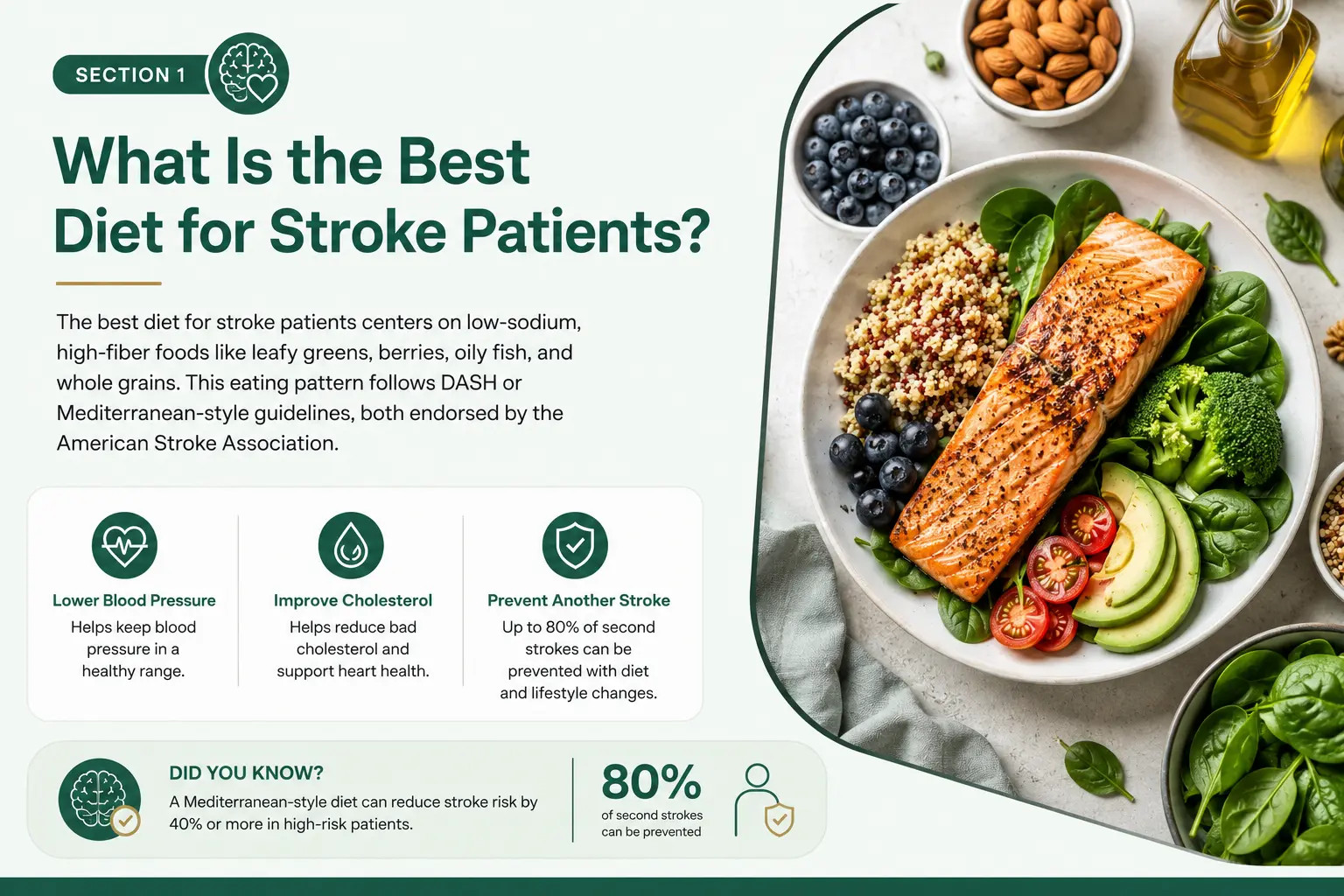
The best diet for stroke patients centres on low-sodium, high-fibre foods like leafy greens, berries, oily fish, and whole grains. This eating pattern follows DASH or Mediterranean-style guidelines, both endorsed by the American Stroke Association. It lowers blood pressure and cholesterol, the two biggest risk factors behind a repeat stroke.
Studies show this approach works. A Mediterranean-style diet can reduce stroke risk by 40 percent or more in high-risk patients, according to research published in the National Institutes of Health database. For a stroke patient, that number represents real protection, not just a general wellness claim.
Here are the core foods to build a stroke recovery diet around:
- Leafy greens such as spinach and kale, rich in potassium and nitrates
- Fatty fish like salmon and sardines, high in omega-3 fatty acids
- Berries such as blueberries and strawberries, packed with antioxidants
- Whole grains like oats and brown rice, for steady blood sugar
- Legumes such as lentils and beans, low in sodium and high in fibre
- Nuts and seeds, especially walnuts and flaxseed, for healthy fats
Why Diet Matters So Much After a Stroke
A stroke happens when blood flow to the brain gets blocked or reduced. Diet plays a direct role in three major risk factors: blood pressure, cholesterol, and blood sugar. When these stay controlled, the brain gets steady blood flow and oxygen. When they spike, the risk of another stroke rises sharply.
This is not a minor detail. According to the American Heart Association, up to 80 percent of second strokes can be prevented through lifestyle and diet changes. That single fact changes how caregivers should think about meals after a stroke. Food becomes part of the treatment plan, not just comfort or routine.
High sodium intake raises blood pressure, one of the strongest predictors of a repeat stroke. Saturated fat raises cholesterol, which narrows arteries over time. Refined sugar spikes blood glucose, straining blood vessels throughout the body. Each of these effects compounds the others, so a consistent, low-sodium, high-fibre diet works on all three fronts at once.
Foods to Eat for Stroke Recovery
Recovery nutrition needs to rebuild strength while protecting the heart and brain from further damage. Every meal after a stroke should work toward two goals at once: healing the body and lowering the chance of another event. The foods below cover both.

Leafy Greens and Vegetables
Leafy greens like spinach, kale, and arugula are rich in potassium and dietary nitrates. Potassium helps balance sodium levels and keeps blood pressure steady. Nitrates improve blood flow to the brain, which supports recovery and lowers strain on damaged blood vessels.
Fatty Fish
Salmon, sardines, and mackerel deliver omega-3 fatty acids in concentrated form. Omega-3s reduce inflammation throughout the body, including in blood vessels affected by the stroke. Regular fish intake also supports heart health, which matters since heart and brain health are closely linked after a stroke.
Berries and Fruits
Blueberries, strawberries, and other berries carry high levels of antioxidants and fibre. Antioxidants help protect brain cells from further oxidative damage after a stroke. Fibre also supports healthy digestion, which often slows down during recovery and limited mobility.
Whole Grains
Oats, brown rice, and quinoa provide steady, slow-releasing energy through fiber. Stable blood sugar matters greatly for stroke patients, since sharp glucose spikes stress blood vessels. Whole grains also support digestion and help maintain a healthy weight during recovery.
Nuts and Seeds
Walnuts, almonds, and flaxseeds offer healthy fats along with vitamin E. Vitamin E protects cell membranes from oxidative stress, which becomes especially important during brain recovery. These foods also make an easy, portable snack for patients managing appetite changes.
Legumes
Lentils, chickpeas, and beans provide plant-based protein without the sodium found in many animal proteins. Protein supports muscle repair and strength rebuilding after a stroke. The fibre in legumes also helps manage cholesterol, one of the key risk factors for a second stroke.
Foods to Avoid After a Stroke
Knowing what to avoid matters just as much as knowing what to eat. The wrong foods can undo progress quickly, raising blood pressure, cholesterol, and blood sugar right back into dangerous territory.
High-Sodium Processed Foods
Packaged snacks, canned soups, and processed meats carry hidden sodium levels that push blood pressure up fast. High blood pressure remains the single biggest risk factor for a repeat stroke. Reading labels and cooking fresh meals at home makes a real difference here.
Fried and Trans-Fat-Heavy Foods
Fried foods and items made with hydrogenated oils raise bad cholesterol levels. This narrows arteries over time and restricts blood flow to the brain and heart. Swapping fried foods for baked or grilled options protects long-term vascular health.
Sugary Drinks and Refined Carbs
Sodas, sweetened juices, and white bread spike blood sugar quickly. These spikes stress blood vessels and contribute to weight gain, both of which raise stroke risk. Choosing water, unsweetened tea, and whole grains keeps blood sugar steady instead.
Excess Alcohol
Heavy drinking raises blood pressure and interacts poorly with many stroke medications. Even moderate drinking should be discussed with a doctor before resuming after a stroke. Limiting or avoiding alcohol removes one more preventable risk factor.
Foods That Pose Choking Risk (Dysphagia)
Many stroke patients develop dysphagia, a swallowing difficulty caused by nerve or muscle impairment. Dry, crumbly foods like crackers, hard-to-chew meats, and thin liquids like plain water can trigger choking or aspiration. Caregivers should watch for coughing during meals, ask a doctor about a swallow evaluation, and consider softer, thickened-consistency foods when dysphagia is present.
This last point matters most for caregivers of elderly patients, since swallowing difficulty often gets overlooked until a dangerous incident happens.
Sample One-Day Meal Plan for a Stroke Patient
This meal plan offers a simple starting template. Every patient recovers differently, so caregivers should adapt this plan with a doctor or dietitian based on individual needs.
Breakfast
Oatmeal topped with fresh berries and a small handful of walnuts. Pair with a glass of low-fat milk or a cup of unsweetened tea.
Mid-Morning Snack
A small banana or apple with a few almonds.
Lunch
Grilled fish with a side of steamed leafy greens and brown rice. Add a small serving of lentil soup for extra protein and fibre.
Afternoon Snack
A handful of mixed nuts and seeds, or a bowl of fresh berries.
Dinner
Baked salmon with roasted vegetables like spinach or broccoli, served with a small portion of quinoa or whole-grain bread.
Evening (If Needed)
A small bowl of chickpeas or a piece of fruit, kept light to support easy digestion before rest.
Keep portions moderate throughout the day, and space meals evenly to help manage blood sugar levels. For patients with swallowing difficulty, soften textures or blend meals as advised by a speech therapist or doctor.
Special Considerations for Elderly Stroke Patients
Elderly stroke patients often face additional challenges that go beyond a standard diet plan. Age-related changes in muscle strength, swallowing ability, and hydration needs mean recovery nutrition has to be more carefully managed.
Texture-Modified Diets
Many elderly stroke patients struggle with dysphagia, making regular food textures unsafe. A speech therapist or doctor can recommend soft, minced, or pureed foods depending on the severity of swallowing difficulty. Thickened liquids often replace plain water and juice to reduce choking risk during meals.
Hydration Monitoring
Elderly patients dehydrate more easily, and dehydration itself raises stroke risk. Caregivers should track fluid intake throughout the day rather than waiting for the patient to feel thirsty, since thirst signals often weaken with age. Small, frequent sips work better than large amounts at once for patients with swallowing difficulty.
The Value of Supervised Care
Managing all of this at home takes constant attention, and mistakes can lead to serious complications like aspiration pneumonia or dangerous blood pressure swings. A trained caregiver or elder care facility, such as our old age home in Mumbai, brings medical oversight to daily nutrition, adjusting meals as recovery progresses and catching warning signs early.
At our old age home in Panvel, our team builds personalised post-stroke nutrition and recovery plans under medical supervision, so families never have to navigate this alone. From texture-modified meals to daily hydration tracking, every plan adapts to the resident’s changing needs during recovery.
Frequently Asked Questions
What is the best food for a stroke patient to eat first after leaving the hospital?
Soft, low-sodium foods like oatmeal, mashed vegetables, and pureed fruits work well right after hospital discharge. These foods are easy to digest and swallow while still delivering fibre and nutrients needed for early recovery.
Can a stroke patient eat eggs or red meat?
Yes, in moderation. Eggs provide protein and choline, while lean red meat can be eaten occasionally. Choose lean cuts, limit portion size, and avoid processed or fatty red meats to protect heart health.
Is fasting safe for stroke patients?
Fasting is generally not recommended without medical supervision. Stroke patients often need steady nutrition and medication timing, so any fasting plan should be discussed with a doctor first to avoid complications.
What foods help prevent a second stroke?
Leafy greens, fatty fish, berries, whole grains, and legumes all help prevent a second stroke. These foods lower blood pressure, cholesterol, and blood sugar, the three biggest drivers of stroke recurrence.
Reference and stat sourcing notes
1. AHA sodium limit
The American Heart Association recommends sodium intake under 1,500 mg per day for people managing blood pressure and stroke risk.
Source: https://www.ahajournals.org/doi/10.1161/cir.0b013e318279acbf
2. DASH diet blood pressure reduction
Reducing sodium from 2,300 mg to 1,500 mg daily on the DASH diet lowers systolic blood pressure by roughly 2 to 7 mmHg beyond the standard plan. On the full DASH pattern, sodium restriction alone has been shown to lower systolic blood pressure by 7.1 mmHg in adults without hypertension and 11.5 mmHg in adults with hypertension.
Source: https://pmc.ncbi.nlm.nih.gov/articles/PMC5673777/ and https://www.ncbi.nlm.nih.gov/books/NBK482514/
3. Omega-3 and stroke risk reduction
A pooled analysis of over 183,000 participants across 29 studies, published in the journal Stroke, found that people with the highest omega-3 (EPA) blood levels had a 17 percent lower risk of total stroke and an 18 percent lower risk of ischemic stroke compared to those with the lowest levels.
Source: https://www.ahajournals.org/doi/10.1161/STROKEAHA.123.044281
4. Mediterranean diet and stroke risk (already sourced earlier)
A Mediterranean-style diet can lower stroke risk by 40 percent or more in high-risk patients.
Source: https://pmc.ncbi.nlm.nih.gov/articles/PMC6470893/
